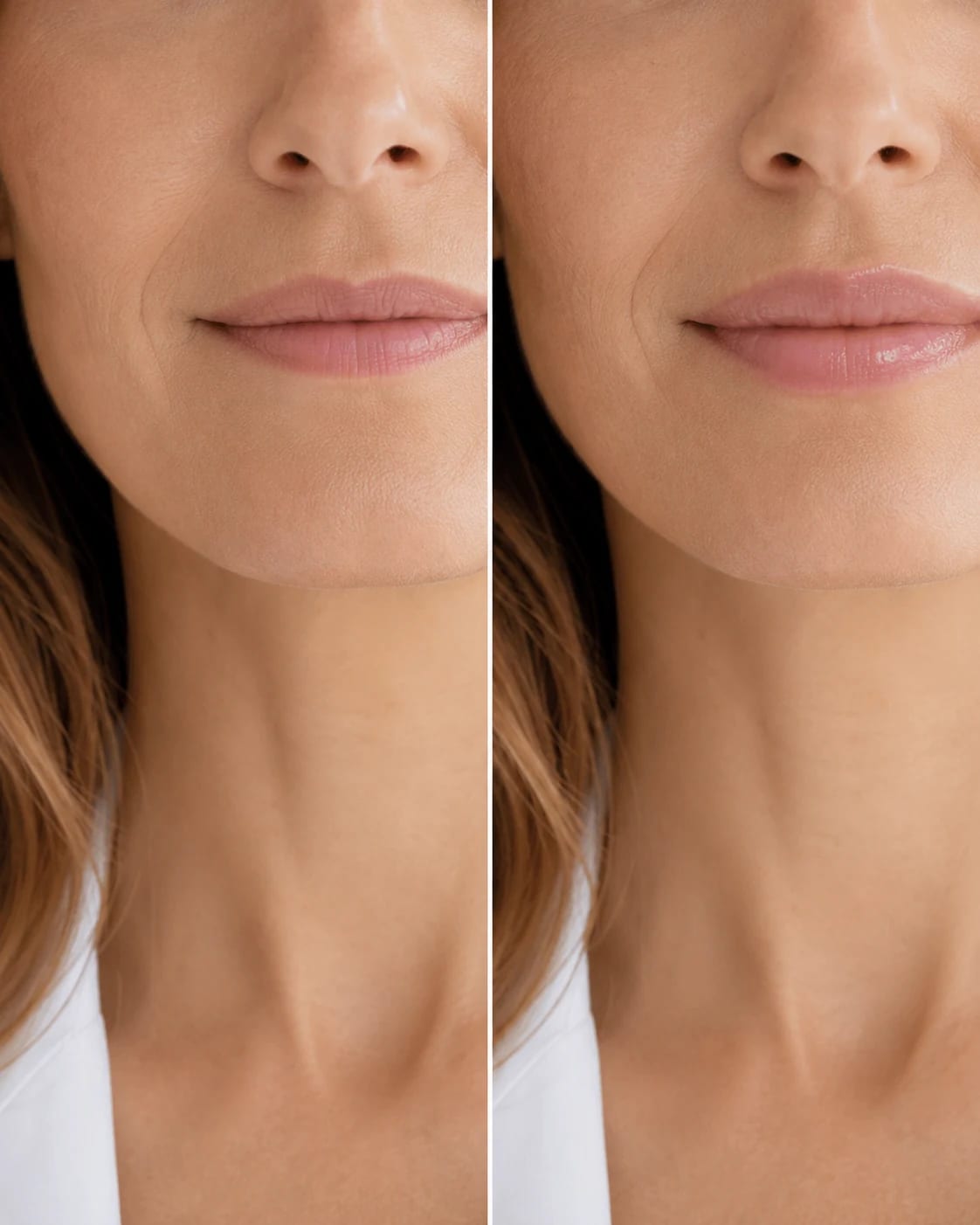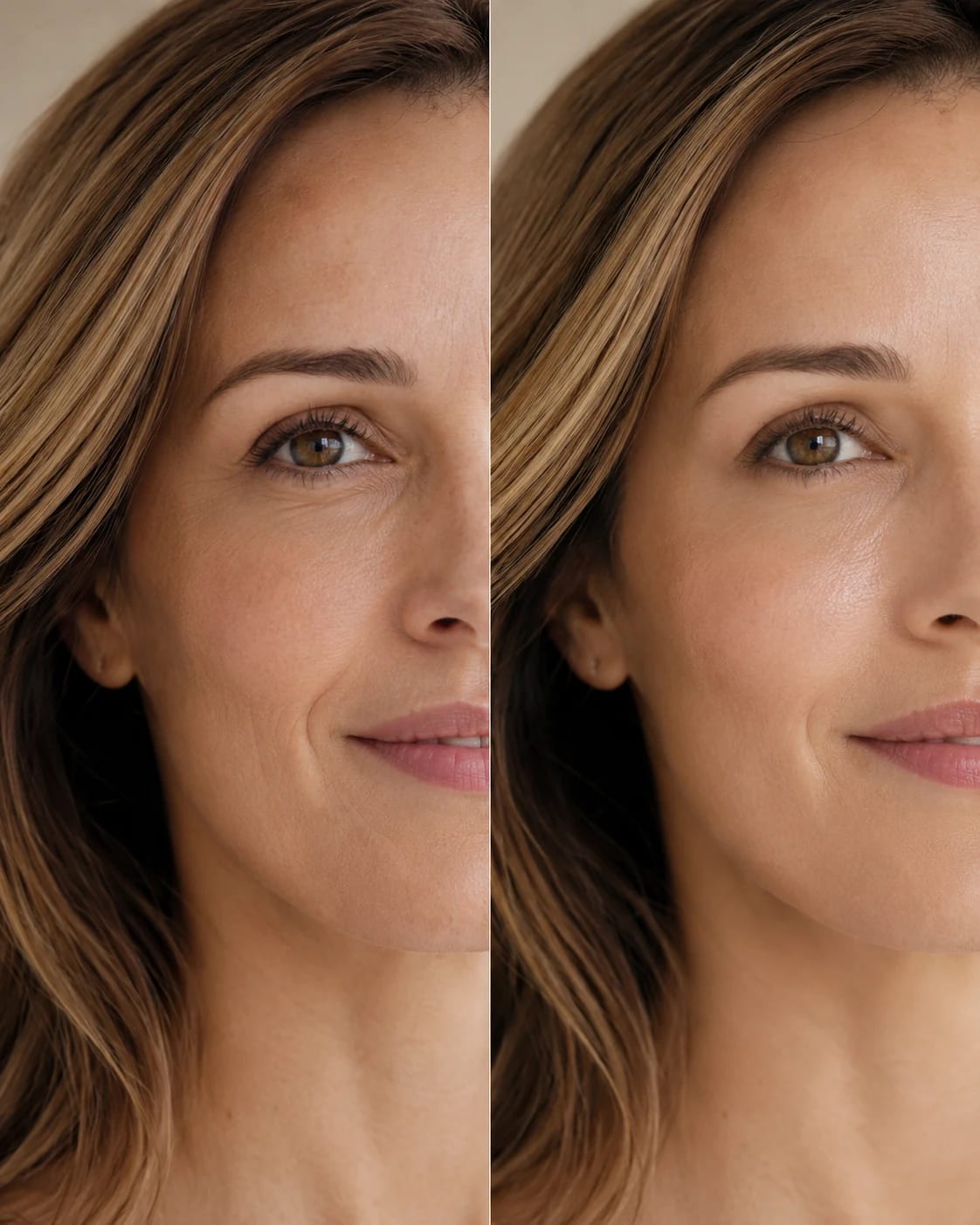
Naturalness starts with analysis
Before treatment, we do not look at a wrinkle alone. Muscle activity, facial symmetry, forehead height, brow position and the expression that should remain are important. A calm, fresh result comes from dosage, distance and precise placement.
Why less is often better
Too much botulinum can reduce expression more than necessary. A professional concept therefore works with priorities: what truly bothers you, which muscle movements intensify the impression and where should movement remain?
Timeline and aftercare
First changes often appear after a few days. The final result is usually assessed after around two weeks. Sport, intense heat and pressure on the treated areas should be avoided briefly after treatment.
How to understand the topic
With botulinum, the activity of individual muscles is central. It is therefore not enough to look only at the visible line. The question is which movement creates it, how strongly the muscle works and whether neighbouring areas react as well. Careful planning also considers forehead height, brow position, the eye area, jaw activity or functional concerns such as excessive sweating. The result is not a standard scheme, but an individual decision. This article is therefore not about quick promises, but about orientation. It is important to separate your own starting point from general trends. What looks harmonious in images or on social media does not automatically fit every face, skin type or life phase. Medical assessment helps bring wish, anatomy and suitability together.
What matters in consultation
Before treatment, it is important to define which expressions should remain. A natural look depends on movement not being reduced more than necessary. Many people want less tension or a fresher appearance, but still want to look friendly, alert and expressive. Dosage is therefore selected according to the face and everyday life. Good consultation works with clear questions: what really bothers you, how long has it been noticeable, and are there previous treatments, allergies, medication or events that need to be considered? Expectations matter as well: is the goal a subtle fresh effect, a precise correction or a long-term strategy? The more clearly these points are discussed, the better a sensible plan can be developed.
Why limits are part of quality
A high-quality treatment is also defined by clearly stated limits. Not every wish should be implemented immediately, and not every visible change needs an injection. Sometimes waiting is sensible, sometimes another method, a smaller dose or a step-by-step approach is better. This restraint is not less professional; it is often the reason results stay natural and can be planned more safely over time.
Preparation and realistic expectations
For a good decision, it helps to collect important questions beforehand. What change would already feel successful to you? Which areas should remain unchanged? Is there an event, holiday, sports activity or celebration that should be considered? Photos from different years can also be useful because they show how the face or skin has developed. This creates a consultation that is structured rather than purely spontaneous.
After the appointment: observe calmly
After aesthetic treatments, patience matters. Tissue, muscles and skin do not always show the final result immediately. The outcome should therefore be assessed at the right time. At the same time, you receive clear guidance on which reactions can be normal and when to contact the practice. This calm follow-up is an important part of the treatment concept because it creates safety and avoids unnecessary uncertainty.
Which information you should bring
For useful guidance, concrete information is more helpful than perfect wording. Note what really bothers you in the mirror, in photos or in daily life. Previous treatments, intolerances, medication, skin reactions, important dates and your current skincare routine are also useful. You do not need to know in advance which treatment is right. That is exactly what consultation is for. The aim is to connect your wish with what is medically understandable and realistically achievable.
How to recognise a responsible recommendation
A responsible recommendation rarely sounds like a promise. It explains what is possible, what remains uncertain and which alternatives exist. It names risks, aftercare and realistic timelines. It may also conclude that treatment is not useful at the moment. This can feel unfamiliar, but it is valuable. Aesthetic medicine should not aim to treat as much as possible, but to do what is appropriate. If you understand after the consultation why a step is recommended, the consultation has been useful.
Why a concept is better than a single appointment
Many aesthetic concerns develop over time. Skin quality, volume, muscle activity and proportions do not change in isolation. It is therefore often useful not only to look at the next appointment, but to plan a sequence. What has priority? What can wait? Which step supports another? A concept does not mean doing a lot. On the contrary, it can help avoid unnecessary steps, plan intervals realistically and follow results more calmly.
What you can do after reading
After reading, a short reality check is useful: which information was new, which concern remains open and which expectation would you like to check during consultation? Write down three to five questions and bring them with you. This turns general guide knowledge into personal orientation. If you already know which area bothers you, photos from different situations can help. If you cannot yet name it precisely, that is also a valid starting point.
Conclusion: plan calmly rather than decide spontaneously
The main value of a detailed guide is not to replace treatment or consultation. It helps you enter the conversation more informed and calmer. Aesthetic medicine becomes more high-quality when decisions are not made under pressure. Take your time, do not compare only prices or images and pay attention to whether you feel understood. A good result often begins long before treatment itself: with analysis, trust, realistic language and a plan that fits you.